Why are mistakes part of learning, not a defeat?
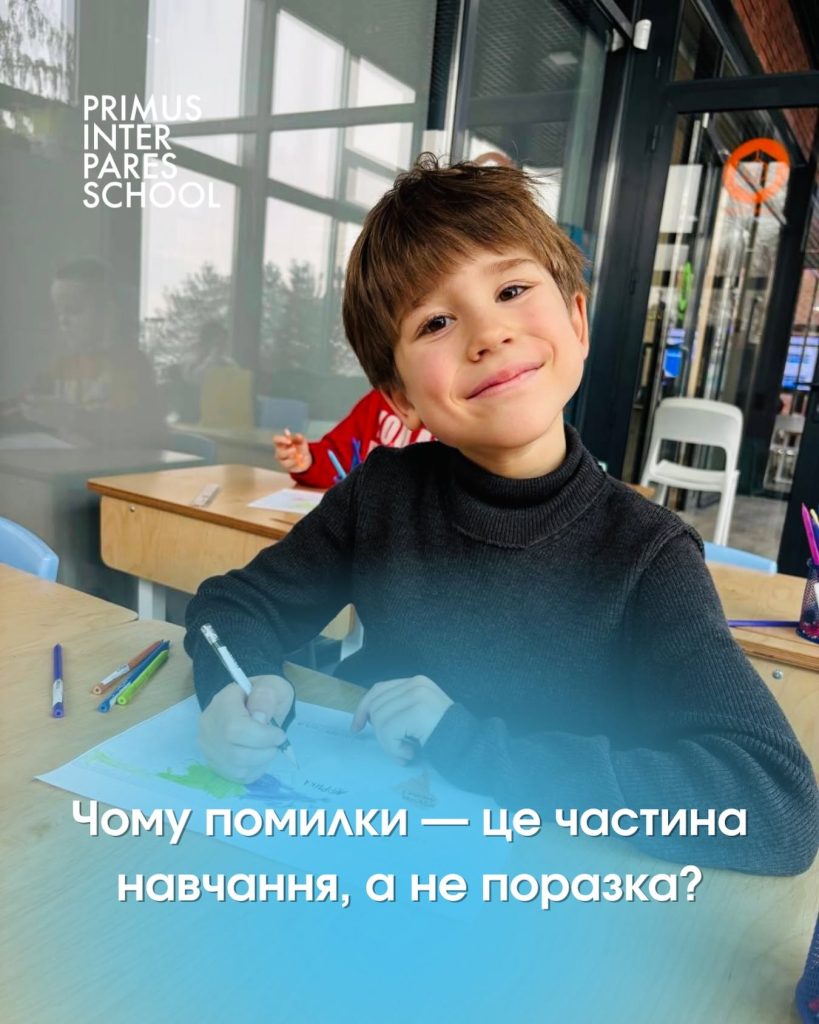
At school, we sometimes observe a simple but very telling picture. A child knows the answer, but is silent. Not because he doesn’t know, but because he is not one hundred percent sure. The fear of making a mistake often turns out to be stronger than curiosity. And this is familiar to many – this is how we were taught at one time 😌
But the child’s brain is designed differently than the school systems of the past. It develops through trial and experiment. When a child makes a mistake and finds another way, new neural connections are created. This is how knowledge becomes flexible, and thinking becomes independent 🧠
If a mistake is perceived as a “failure”, the child very quickly goes into avoidance mode. He begins to choose only safe tasks, is afraid to express his opinion, does not ask questions. From the outside, this looks like obedience and “good behavior”, but inside the main thing disappears – the desire to learn
At PIPS, we consciously build a different approach. We allow the child not to know right away. We give space to think. We ask questions instead of ready-made answers. We analyze mistakes calmly – as part of the journey, not as the end of the story. And gradually we see how the courage to speak, try, defend our own logic appears 😉
This approach is important for all adults to support: it is enough to sometimes change the focus from “right / wrong” to “how did you understand it?”, celebrate efforts, not just the result, and allow the child to look for a solution on their own, even if it takes more time.
We strive for children to get used not to perfect answers, but to the process of thinking. Because in real life, the ability to stop, analyze and find your own way becomes one of the most valuable skills 💙